My Journey
Different rooms. The same purpose.
Over more than a decade, my work has taken me through very different environments — public education, government, corporate learning, engineering, global technology, and early childhood leadership. What holds everything together isn't an industry or a title. It's a purpose that has stayed constant while the rooms kept changing: helping people understand, adapt, and grow. And a habit I keep practicing: letting every project teach me something new.
Where it started
Before the job titles, there was a simple joy.
As a child in Rio de Janeiro, I loved helping classmates learn. One of my earliest memories is helping other children recognize letter sounds while pretending to be a teacher. Looking back, I realize my career didn't begin with a job title — it began with the joy of helping someone else understand something new.
A visual timeline
The arc of a learning professional.
Less a résumé, more the shape of how one purpose moved through very different worlds.
- EducationLearning begins with peopleLearning begins with empathy.
- GovernmentEvery voice mattersListening before creating.
- Change managementHelping people embrace changeConfidence carries adoption.
- Learning designTurning complexity into clarityClarity as a form of care.
- Global learningLearning without bordersAccessibility, clarity, curiosity.
- Educational leadershipLeading with purposeTrust, relationships, growth.
- Today & beyondThe journey continuesThe purpose remains the same.
01
Education
Learning begins with people.
My connection to education started long before any degree. As a child in Rio, I was already drawn to the moment someone understands something new — that small, quiet shift that changes what feels possible. That early joy of helping others learn quietly shaped every academic choice that followed. My Bachelor's, my postgraduate studies, and my Master's are all intentionally rooted in Education and Technology, but the thread beneath them was never simply about earning degrees. Across every one of them, I wasn't only studying education. I was trying to understand why some learning experiences change people while others are quickly forgotten — what invites someone in, what holds them back, and what helps a new idea actually take root. Empathy became my first design principle because I've always been more fascinated by the learning process itself than by any subject being taught.
The lesson
Learning begins with empathy.
02
Government
Every voice matters.
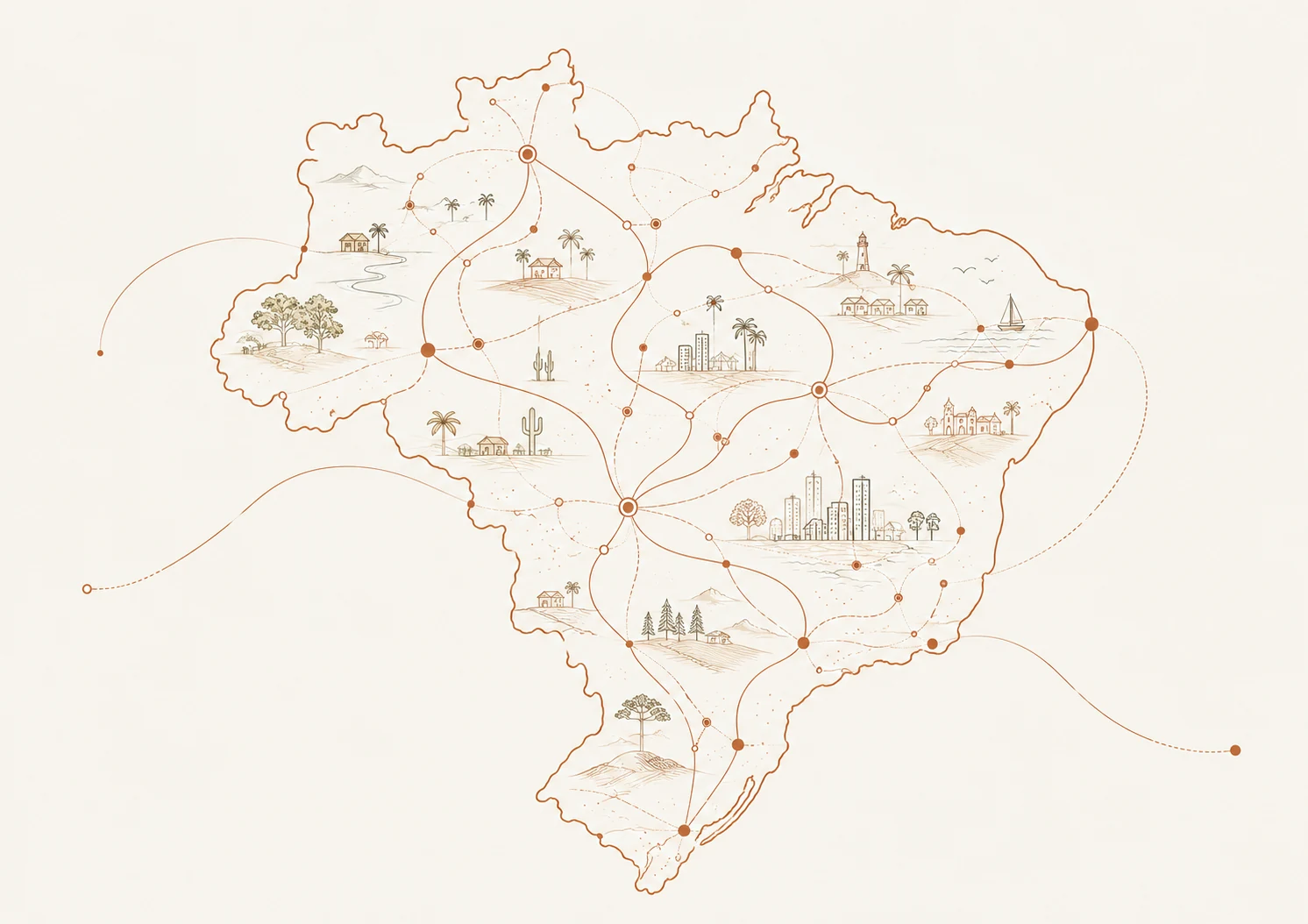
Designing learning for the Brazilian Demographic Census meant reaching tens of thousands of field workers across regions with very different realities — from connected cities to communities with limited access to technology. There was no single learner, and no single context. The work asked me to listen carefully before proposing anything, and to respect that a strategy only works when it fits the person, the place, and the moment. That project became a lasting reminder that meaningful learning begins with listening — that good design starts by understanding people's realities, not by delivering content.
The lesson
Listening before creating.
02 — Government 03
Change management
Helping people embrace change.
In corporate environments, I worked alongside organizations rolling out new systems and new ways of working. The technology was rarely the hardest part. The hardest part was helping people feel prepared, respected, and confident enough to change how they had always done things. Through communication, learning, and thoughtful change management, my role was to make transitions feel less like disruption and more like a next step people could take with confidence.
The lesson
Confidence carries adoption.
04
Learning design
Turning complexity into clarity.
Across engineering, insurance, consulting, and corporate learning, the industries changed but the challenge stayed remarkably similar: how do you take something dense, technical, or unfamiliar and turn it into something a real person can understand, use, and act on? I learned to translate complexity without losing accuracy, to design for the moment of use, and to trust that highly capable adults still deserve materials that meet them with care. Over time, I've come to believe that clarity is one of the deepest forms of respect we can offer a learner — a quiet way of honoring their time, their intelligence, and the effort it takes to grow.
The lesson
Clarity as a form of care.
05
Global learning
Learning without borders.
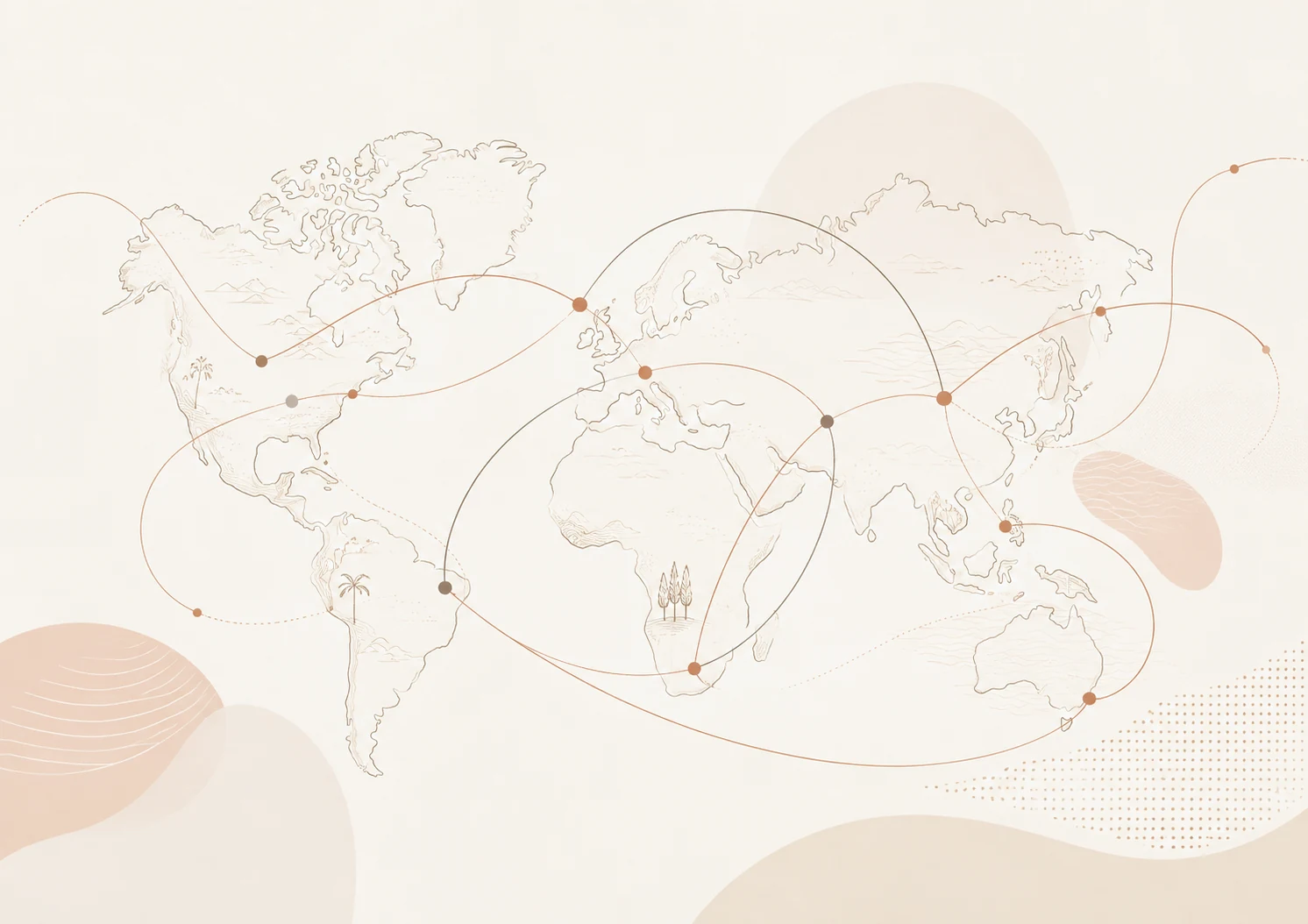
Working with global teams — including my time at Apple — stretched my thinking about what learning has to carry: accessibility as a baseline rather than an afterthought, quality as a shared standard rather than a personal preference, and continuous improvement as an everyday habit. Across languages, locales, and cultures, I learned that clear thinking and genuine curiosity travel farther than any single method. My own experience as an immigrant, and as someone who works every day in a second language, quietly became one of my greatest strengths in this chapter. Rather than narrowing my view, it deepened it — teaching me to design with more empathy, more accessibility, and a sharper awareness of how differently a single idea can land across the world.
The lesson
Accessibility, clarity, curiosity.
05 — Global learning 06
Educational leadership
Leading with purpose.
This is the chapter I'm in now. My days are spent coaching educators, partnering with families, supporting leadership, strengthening communication, engaging my community, and cultivating environments where educators, families, children, leaders, and communities grow together. Leadership, I keep learning, is less about direction and more about trust — building relationships strong enough that people can take honest risks, ask real questions, and become more of who they are meant to be. My focus isn't a specific age group; it's the environment where learning becomes possible for everyone in the room.
The lesson
Trust, relationships, growth.
07
Today & beyond
The journey continues.
My environments keep changing — from classrooms to national programs, from engineering to global technology, from corporate learning to educational leadership. What has never changed is why I do this work. As technology evolves and organizations continue to change, I keep returning to the same question: how can learning help people move forward with confidence? That question is what carries me from one chapter into the next. Every project leaves me with new perspectives and a deeper understanding of how people learn, and my own learning journey continues right alongside theirs.
The lesson
The purpose remains the same.
Lessons I've carried with me
What experience has taught me.
After more than ten years across very different industries and organizations, these are the reflections I return to most often — and the ones I expect the next project to keep refining.
Learning is a relationship before it is a process.
The best programs fail when they forget the person on the other side. Simple, well-designed moments can change someone's confidence forever. The difference is almost always care.
The people closest to the work often have the answers.
My job is rarely to provide the solution. It's to ask the right question, create space, and help people find their own clarity. That's where ownership begins — for teachers, engineers, or field workers alike.
A strategy has to fit every reality, not just the average one.
Working across communities with very different access to technology taught me to design for the edges, not the middle. When the strategy works there, it works everywhere.
Every project teaches me something new.
I've stopped presenting myself as someone with all the answers. Every organization, culture, and technology has changed how I think about this craft. Curiosity is the practice that keeps the work honest.
A moment that stays with me
The next chapter is already beginning.
Every project leaves me with new questions, new perspectives, and a deeper understanding of how people learn. I'm excited to discover where the next chapter will lead.
Different rooms, different learners, one purpose — helping people understand, adapt, and grow through meaningful learning.